Frequently Asked Questions
The most-asked questions about war in mythology.
What does 'war in mythology' refer to as a subject?
It is the collective study of how ancient and pre-modern cultures narrated armed conflict through their pantheons, heroes, and cosmogonic stories. It spans Greek, Norse, Hindu, Mesoamerican, Chinese, and many other traditions, treating warfare as a narrative engine rather than a historical record.
Who are the most widely recognized war figures across mythologies?
Ares and Athena (Greek), Thor and Tyr (Norse), Indra and Shani (Hindu), Huitzilopochtli (Aztec), and Erlang Shen (Chinese) are among the most cited. Many traditions pair a 'strategic' war deity with a 'frenzy' deity to contrast disciplined wisdom against uncontrolled rage.
What are the largest or most famous mythological wars?
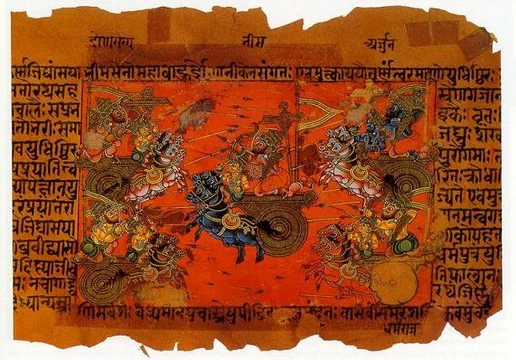
The Trojan War, Ragnarök, the Kurukshetra battle, and the Hero Twins' conflict in the Popol Vuh are the most frequently referenced. Each typically pits a full pantheon against another and reshapes the cosmic order by its conclusion.
Where should a newcomer begin exploring this topic?
Start with the Iliad and the Mahabharata, since those two epics frame war as both a divine mandate and a deeply human tragedy. From there, the Völuspá and the Popol Vuh offer contrasting non-Western perspectives without requiring prior specialized knowledge.
What themes recur across mythological accounts of war?
The most persistent motifs are a mortal's hubris provoking the gods, a divine wager that sends armies into battle, and the idea that a great war is necessary to reset a corrupted world order. Sacrifice, fate versus free will, and the blurring of heroism and slaughter also appear in nearly every tradition.
How do mythologies distinguish between sanctioned war and chaotic violence?
Many pantheons split the concept into a god of ordered, ritualized combat (Athena, Indra) and a god of mindless slaughter (Ares, Kali in her destructive aspects). This binary lets stories explore whether a given conflict is justified, cursed, or both at once.
What weapons or symbols are most iconic in mythological warfare?
Zeus's thunderbolt, Odin's Gungnir, Shiva's trident, Thor's Mjölnir, and the Gandiva bow from the Mahabharata are the most frequently referenced. These objects usually carry narrative weight beyond their physical form, encoding a god's domain or a hero's destiny.
Do mythological wars ever end in a clear victory?
Rarely in the way modern narratives expect: the Trojan War ends with Troy's fall but leaves both sides devastated, Ragnarök destroys nearly every god, and Kurukshetra leaves the victors exiled. The pattern suggests mythologies treat war as a cost paid to the cosmos rather than a problem to be solved.
What is a single notable moment that encapsulates the theme?
Achilles dragging Hector's body behind his chariot in the Iliad is often cited as the clearest image of war stripping away honor and reducing gods and men to a cycle of vengeance. It crystallizes the tension between divine command and human grief that runs through most mythological combat narratives.
How do modern fans and scholars use 'war in mythology' as a lens?
It serves as a comparative framework for understanding how cultures externalize conflict, justify authority, or process collective trauma through narrative. In fandom and creative writing, it also supplies a ready-made vocabulary—divine councils, fate-weavers, weapon-embodied powers—that writers adapt for new stories.