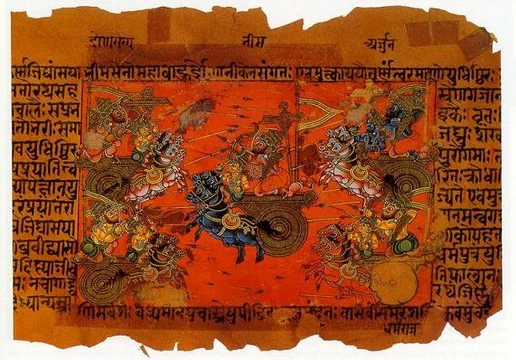
Batrachomyomachia
A comic epic parodying the Iliad with frogs and mice.

Wikipedia / Wikimedia Commons
The *Batrachomyomachia* (from the Greek for "frog," "mouse," and "battle"), or *Battle of the Frogs and Mice*, is a comic epic that parodies the *Iliad*. Its author and exact date remain unknown, though it belongs to the classical era—Plutarch was aware of it. Traditionally dated to the 5th century BC, linguistic evidence later pointed to an Ionian origin in the 3rd or 2nd century BC. A smaller group of scholars argues it was written during the Roman period and ascribes it to Lucian (2nd century AD). A High Medieval manuscript credits the poem to Timarchus of Caria, an otherwise obscure figure who may be the tyrant Timarchus of Miletus (killed in 258 BC during the Syrian Wars) or the usurper king Timarchus (killed in 160 BC in the early Seleucid Dynastic Wars); both men likely came from Miletus.
The word *batrachomyomachia* has come to mean "a trivial altercation." Both the Greek term and its German translation, *Froschmäusekrieg*, have been used to describe disputes, such as the one between ideologues and pragmatists in the Reagan administration.
**Plot** The Mouse-Prince Psicharpax, after escaping a weasel, stops at a lake to drink. There he meets the Frog King Physignathus (meaning "puff-cheek" or "swollen-jaw"), who offers to show him his kingdom on the far shore. Psicharpax climbs onto the Frog King's back, and Physignathus begins swimming. Midway across, a terrifying water snake appears. Physignathus dives to safety, forgetting Psicharpax, who cannot swim and drowns.
Another Mouse witnesses the death and informs the other Mice. Believing the Frog King acted treacherously, they arm for battle, send a herald to the Frogs with a declaration of war, and prepare to avenge Psicharpax. The Frogs blame their king, who denies the incident entirely. Meanwhile, Zeus sees the brewing war and suggests the gods take sides, specifically asking Athena to help the Mice. She refuses, noting that both Mice and Frogs have caused her mischief, and advises the gods to watch rather than intervene. The battle proceeds, and the Mice gain the upper hand. To prevent the Frogs' complete destruction, Zeus summons a force of crabs. The Mice, powerless against the armored crabs, retreat, and the one-day war ends at sundown.
**Characters** Alongside familiar Greek gods, the *Batrachomyomachia* introduces many new characters who lead the two armies
- field
- Comic epic / Parody
- known_for
- Parody of the Iliad featuring a war between frogs and mice
- date
- Uncertain; traditionally 5th century BC, but linguistic studies suggest 3rd or 2nd century BC; minority view places it in the 2nd century AD
Lore & Background
The Batrachomyomachia recounts the story of Psicharpax, the Mouse-Prince, who escapes a weasel and stops by a lake to drink. There he meets the Frog King Physignathus (meaning "puff-cheek" or "swollen-jaw"), who offers to show him his kingdom across the lake. Psicharpax climbs onto the Frog King's back, but in the middle of the lake they encounter a frightening water snake. Physignathus dives for safety, forgetting Psicharpax, who cannot swim and drowns. Another Mouse witnesses the death and informs the Mice, who arm for battle to avenge what they see as the Frog King's treachery. The Frogs blame their king, who denies the incident. Zeus proposes the gods take sides, but Athena refuses, saying both Mice and Frogs have done her mischief. The battle proceeds, and the Mice prevail until Zeus summons crabs, forcing the Mice to retreat as the war ends at sundown.
Reader's Guide
The Batrachomyomachia is significant as a surviving example of classical parody, humorously recasting the heroic conventions of the Iliad with animal warriors armed with sticks, needles, and armor made from nut shells, bean pods, and straw. Its uncertain authorship—attributed variously to Homer, Pigres of Halicarnassus, Lucian, or Timarchus of Caria—reflects the poem's contested origins. The word 'batrachomyomachia' has come to mean 'a trivial altercation,' and both the Greek term and its German translation, Froschmäusekrieg, have been used to describe disputes such as those between ideologues and pragmatists in the Reagan administration. The poem's legacy includes its influence on later animal-based comic epics like the Galeomyomachia and Catomyomachia, though only fragments of those survive.
Did You Know?
- The poem's composition date is uncertain; it was traditionally placed in the 5th century BC, but linguistic studies suggest an origin in Ionia during the 3rd or 2nd century BC.
- A manuscript from the High Middle Ages attributes the poem to Timarchus of Caria, possibly the tyrant Timarchus of Miletus or the usurper king Timarchus.
- The word 'batrachomyomachia' has come to mean 'a trivial altercation.'
- The poem introduces characters with names like Psicharpax ('the crumb-catcher') and Physignathus ('the pouter').
More in War in mythology 1-20
Spotted an error? Know more?
This is a living reference — every entry is fact-audited, and reader corrections feed straight into our audit queue. Suggest an edit · See this site's audit record