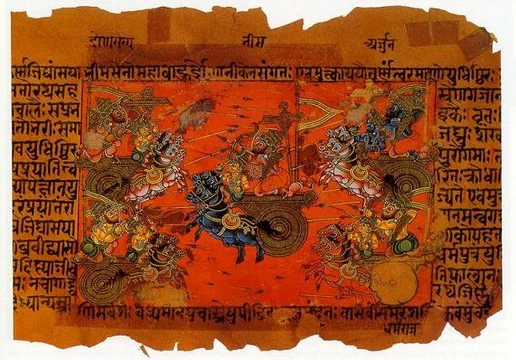
Battle of Hayots Dzor
Legendary battle founding Armenian identity, Hayk defeats tyrant Bel.

Wikipedia / Wikimedia Commons
The Battle of Hayots Dzor is a legendary event from Armenian national mythology, traditionally placed in 2492 BC. The 5th-century historian Movses Khorenatsi recorded that the conflict pitted Hayk, the revered patriarch and symbolic founder of the Armenian people, against Bel, a foreign tyrant often linked to the Babylonian ruler Bel. This mytho-historical clash, set in the mountainous region near the eastern shore of Lake Van, is a cornerstone of Armenian cultural memory. Hayk’s victory is depicted not only as a triumph over oppression but also as the origin of Armenian identity and independence, giving rise to the name Hayastan for the land and Hay for its people.
The sole surviving account comes from Khorenatsi’s *History of Armenia*, a work blending oral tradition, myth, genealogy, and early historical recollections. Though Khorenatsi is often called the “father of Armenian history,” modern scholars view his narratives critically, recognizing their symbolic and literary nature. Still, the tale of Hayk and Bel has remained central to Armenian collective identity for centuries, often interpreted as a metaphorical memory of early resistance against Mesopotamian dominance and the assertion of a distinct culture in the Armenian Highlands.
According to legend, Bel, a Titan-like giant, became a tyrannical ruler in Babylonia, declaring himself both king and god. He sought to subjugate all peoples. Hayk refused to bow to Bel’s authority, gathering his extended family and about 300 followers with their households, and left Babylonia for the land of Ararat in the Armenian Highlands. Bel sent envoys, including one of his sons, to demand submission, but Hayk rejected the ultimatum. Bel then assembled a vast army and marched north. Hayk fortified his warriors in the valley of Hayots Dzor, in the district of Eruandunik near Lake Van’s eastern shore.
Bel appeared on the battlefield in elaborate armor: an iron headdress with glistening pendants, copper plates on his chest and back, armored limbs, and a belt. He carried a double-edged sword on his left, a massive spear in his right, and a large shield on his left, flanked by elite warriors. Hayk positioned his forces strategically, placing Aramaneak and two brothers on the right flank, Kadmos with two other sons on the left—all skilled with bow and sword—while Hayk himself led the front in a triangular formation. While
- Date
- 2492 BC (traditional)
- Location
- Hayots Dzor valley, near eastern shore of Lake Van
- Combatants
- Hayk and his followers vs. Bel and his army
- Outcome
- Victory for Hayk; Bel killed
- Primary Source
- Movses Khorenatsi, History of Armenia
- Cultural Significance
- Founding event of Armenian nation; origin of names 'Hay' and 'Hayastan'
Lore & Background
Following his victory, Hayk founded a settlement at the site and named it Haykʻ, from which the valley derived the name Hayots Dzor ('Valley of the Armenians'). The hill where Bel and his warriors fell was named Gerezmank. Bel’s corpse, preserved with ointments, was taken to Hark and buried on a hill before his wives and sons. According to legend, the Armenian nation was thereafter called 'Hay' and the land 'Hayastan' or 'Hayq' after Hayk Nahapet (the Forefather). Many regions in the Armenian Highlands are mythologically attributed to Hayk and his descendants, including Mount Aragats, Armavir, and Mount Masis (Ararat).
Reader's Guide
The Battle of Hayots Dzor is central to Armenian mythology as the founding event of the Armenian nation, marking Hayk’s victory over Bel as the moment of liberation and the establishment of Armenian identity. According to Movses Khorenatsi, this event in 2492 BC not only secured the independence of Hayk’s people but also gave rise to the names 'Hayastan' and 'Hay' after Hayk Nahapet. A 2015 genetic study published in the American Journal of Human Genetics identified a population bottleneck around 4,500 years ago—roughly consistent with Khorenatsi’s chronology—suggesting a significant demographic or cultural shift possibly linked to Armenian ethnogenesis. Further archaeological and genetic research has linked this timeframe to the expansion of the Trialeti-Vanadzor culture, a Middle Bronze Age civilization centered in the Armenian Highlands, often interpreted as a strong candidate for the Proto-Armenian horizon. Genome-wide studies have identified a substantial influx of steppe-related ancestry into the South Caucasus during the mid–3rd millennium BC, corresponding with the rise of this culture. Many scholars interpret this convergence of data as evidence of a Bronze Age cultural substrate from which Armenian identity emerged, situating the myth of Hayk and Bel within a broader historical framework of Indo-European migrations and cultural consolidation.
Did You Know?
- The battle is traditionally dated to 2492 BC, based on the 5th-century historian Movses Khorenatsi.
- Hayk killed Bel with a three-feathered arrow from his longbow, which was stretched 'as broad as a lake.'
- The name 'Hayastan' for Armenia derives from Hayk Nahapet, the legendary forefather.
- A 2015 genetic study identified a population bottleneck around 4,500 years ago, roughly consistent with the traditional date of the battle.
More in War in mythology 1-20
Spotted an error? Know more?
This is a living reference — every entry is fact-audited, and reader corrections feed straight into our audit queue. Suggest an edit · See this site's audit record