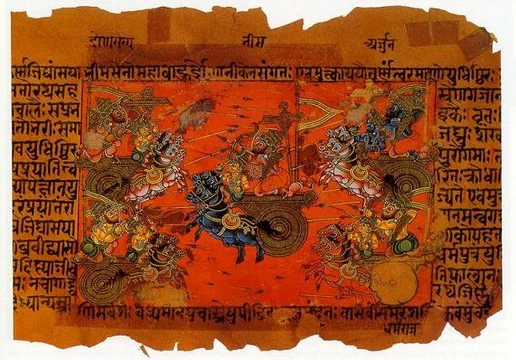
Battle of Brávellir
Legendary battle between Swedish and Danish kings for control of Scandinavia.
The Battle of Brávellir (or Battle of Bråvalla) is a legendary battle said to have taken place around 770, described in Norse sagas and most extensively in Saxo Grammaticus's Gesta Danorum. It was fought between Sigurd Hring, king of Sweden and the Geats of Västergötland, and his uncle Harald Wartooth, king of Denmark and the Geats of Östergötland, and is a key event in Scandinavian legendary history.
- Date
- c. 770 (legendary)
- Location
- Brávellir (Bråvalla) in East Götaland, south of Kolmården near Bråviken; some sources place it at Lake Åsnen in Småland
- Combatants
- Sigurd Hring (Sweden, West Götaland) vs. Harald Wartooth (Denmark, East Götaland)
- Forces
- 200,000 men per side; 3,000 longships for Swedes; Danes built enough ships to walk across Øresund
- Outcome
- Sigurd Hring victorious; Harald Wartooth killed; 40,000 warriors died
- Historicity
- Disputed; considered a fictionalized historic event; historicity impossible to verify
Lore & Background
According to legend, Harald Wartooth had inherited Sweden from his maternal grandfather Ivar Vidfamne but ruled Denmark and East Götaland, while his subordinate king Sigurd Hring ruled Sweden and West Götaland. Harald, fearing he would die of old age and not enter Valhalla, asked Sigurd to let him die gloriously in battle. Odin is also implicated in the conflict. Both sides prepared for seven years, assembling armies of 200,000 men. Harald was joined by heroes such as Ubbe of Friesland, Hothbrodd the Indomitable, and 300 shieldmaidens led by Hed, Visna, and Hedborg. Sigurd recruited Starkad, Egil the Bald, and others, along with warriors from Norway, Slavs, Finns, Estonians, Curonians, Bjarmians, Livonians, Saxons, Angles, Frisians, Irish, and Rus'.
Reader's Guide
The Battle of Brávellir holds a significant place in Scandinavian legendary history as a foundational conflict between the kingdoms of Sweden and Denmark. Its extensive description in Gesta Danorum and Norse sagas has made it a subject of scholarly debate for centuries. The battle's historicity has swung between acceptance and rejection: older scholarship treated it as largely historical, while late 19th-century hypercritical views considered it entirely fictional. By the early 20th century, opinion again favored historicity, though modern scholarship regards it as a fictionalized historic event. The Swedish encyclopedia Nationalencyklopedin (1990) concluded that its historicity is impossible to verify. A hypothesis links the battle to events of 827 when Harald Klak was expelled from Denmark. The battle's legacy endures as a symbol of legendary heroism and the struggle for dominance in early Scandinavia.
Did You Know?
- Harald Wartooth asked his nephew Sigurd Hring to let him die in battle rather than of old age, to ensure entry into Valhalla.
- Both armies prepared for seven years and each mustered 200,000 men.
- The Danish army included 300 shieldmaidens led by Hed, Visna, and Hedborg.
- Harald Wartooth was killed by his own steward Bruni, who crushed the king's skull with a club after deeming he had gained enough glory.
More in War in mythology 1-20
Spotted an error? Know more?
This is a living reference — every entry is fact-audited, and reader corrections feed straight into our audit queue. Suggest an edit · See this site's audit record