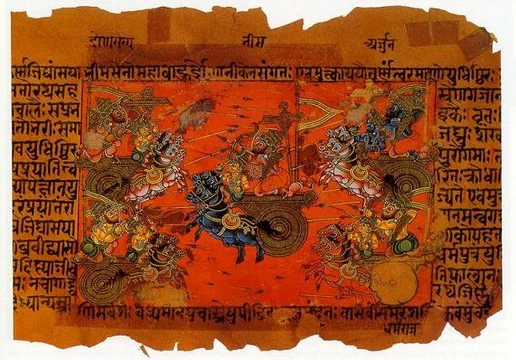
Battle of Mag Itha
First battle in Irish mythology, fought between Fomorians and Partholón's people.
The Battle of Mag Itha is, according to Irish mythology, the first battle fought in Ireland. It was waged between the Fomorians, led by Cichol Gricenchos, and the followers of Partholón. Medieval sources date the battle to between approximately 2668 BCE and 2580 BCE, though the exact year is disputed among the texts.
- Date (Lebor Gabála Érenn)
- AM 2618 (circa 2580 BCE)
- Date (Annals of the Four Masters)
- AM 2530 (circa 2668 BCE)
- Location
- Disputed; possible sites include County Donegal, County Fermanagh, County Sligo, County Wicklow, and Déisi territory
- Combatants
- Fomorians vs. followers of Partholón
- Fomorian leader
- Cichol Gricenchos
- Victorious side
- Partholón's followers
- Number of Fomorians (Lebor Gabála)
- 300
- Number of Fomorians (Annals of the Four
- 800
Lore & Background
The earliest recensions of the Lebor Gabála state that Cichol was killed and the Fomorians destroyed. Later recensions add that the Fomorians had one arm and one leg each, the battle lasted a week, and no one was killed or wounded as it was fought by magic. The Annals of the Four Masters record 800 Fomorians taking part, all of whom were killed. Geoffrey Keating's Foras Feasa ar Éirinn mentions the battle but gives little detail and no date.
Reader's Guide
The Battle of Mag Itha holds significance as the foundational conflict in Irish mythological history, marking the first recorded battle on the island. Its accounts vary across medieval sources, reflecting the fluid nature of oral tradition and later scribal interpretation. The battle establishes the Fomorians as an ancient, pre-human presence in Ireland, while Partholón's victory introduces the theme of successive invasions that dominate the Lebor Gabála Érenn. The dispute over the battle's location—with candidates in counties Donegal, Fermanagh, Sligo, Wicklow, and Déisi territory—highlights the difficulty of correlating mythological geography with modern places. The magical, bloodless version in later recensions contrasts with the earlier violent account, suggesting evolving literary or theological purposes. As the first battle, it sets a precedent for the many conflicts that shape Ireland's mythological cycles.
Did You Know?
- The Fomorians had lived in Ireland for 200 years before Partholón's arrival, subsisting by fishing and fowling.
- Partholón's people were the first in Ireland to build houses and brew ale.
- Later recensions of the Lebor Gabála say the Fomorians had one arm and one leg each, and the battle was fought by magic with no casualties.
- The Annals of the Four Masters records 800 Fomorians in the battle, all of whom were killed.
More in War in mythology 1-20
Spotted an error? Know more?
This is a living reference — every entry is fact-audited, and reader corrections feed straight into our audit queue. Suggest an edit · See this site's audit record