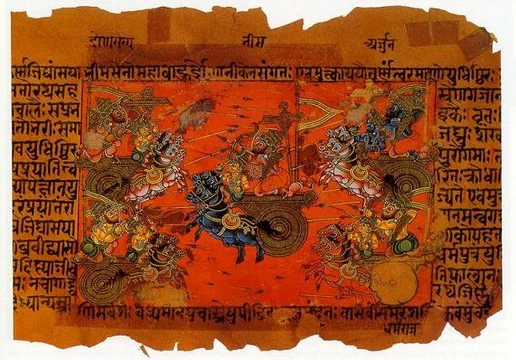
Battle of Zhuolu
Legendary battle between Yellow Emperor and Chiyou in ancient China.
The Battle of Zhuolu is a legendary conflict from ancient China, traditionally dated to around 2500 BC. According to the *Records of the Grand Historian*, it was the second battle recorded in Chinese history. The opposing forces were the Yanhuang tribes, led by the Yellow Emperor, and the Jiuli tribes, commanded by Chiyou. The fighting took place near Zhuolu, close to the modern border between Hebei and Shanxi. Although the Yellow Emperor’s victory is often treated as historical fact, nearly all details from this era are considered legendary.
In the period leading up to the battle, the Yellow Emperor’s Youxiong tribe had grown powerful on the Guanzhong plains. After the Battle of Banquan, it merged with the Yan Emperor’s Shennong tribe, forming the Yanhuang alliance. These combined tribes then spread eastward along the Yellow River toward the sea. Meanwhile, Chiyou’s Jiuli tribes—also known as the “nine Lis”—had developed near the present-day borders of Shandong, Hebei, and Henan, and were expanding westward. Both groups clashed over the fertile Yellow River valley, leading to the confrontation at Zhuolu. Chiyou’s warriors were fierce and skilled weapon-makers. They allied with the Kua Fu and Sanmiao tribes and first attacked the Yan Emperor’s people, driving them into Yellow Emperor territory. Enraged, the Yellow Emperor declared war.
Historians generally view the battle’s details as mythical, but the traditional account runs as follows. Chiyou led between 72 and 81 tribes against the Yanhuang forces, shrouding them in thick fog. The Yellow Emperor responded by sending tribes bearing totems of the black bear, brown bear, pixiu, and tiger. Yet the fog caused several initial defeats. To counter this, the Yellow Emperor introduced a south-pointing chariot—a geared device he designed and had built by the craftsman Fang Bo—that could maintain a constant direction. Additionally, the Xuannü tribe aided the Yanhuang side by blowing horns and beating drums to frighten the enemy. Ultimately, the Yanhuang forces prevailed, and Chiyou was killed in Hebei.
After his victory, the Yellow Emperor established his capital at Zhuolu and built an agricultural confederation that later became known as the Huaxia civilization, which eventually evolved into the Han Chinese nation. Because of this battle, the Yellow Emperor and the Yan Emperor are often credited with enabling Ch
- Date
- c. 2500 BC (legendary); traditional historiography places it in the 26th century BC
- Location
- Zhuolu, near present-day border of Hebei and Shanxi
- Combatants
- Yanhuang tribes (Yellow Emperor) vs. Jiuli tribes (Chiyou)
- Outcome
- Victory for the Yellow Emperor
- Significance
- Established the agricultural confederacy that became Huaxia civilization, ancestor of Han Chinese
Lore & Background
In prehistoric China, the Youxiong tribe of Yellow Emperor rose to power on the plains of Guanzhong and merged with Yan Emperor's Shennong tribe following the Battle of Banquan. The Yanhuang tribes spread along the Yellow River towards the East China Sea. The Jiuli tribes, led by Chiyou, had developed near the present-day borders of Shandong, Hebei, and Henan, and expanded westward. The two groups conflicted over fertile land in the Yellow River valley, leading to battle at Zhuolu. Chiyou's tribes were fierce and skilled at making weapons; allying with the Kua Fu tribe and the Sanmiao tribe, they first attacked the Yan Emperor's tribe, driving them into Yellow Emperor's lands, which angered the Yellow Emperor into war.
Reader's Guide
The Battle of Zhuolu is a foundational legend in Chinese historiography, credited with enabling the rise of the Huaxia civilization that later evolved into the Han Chinese nation. After the battle, the Yellow Emperor built his capital in Zhuolu and established an agricultural confederacy. The battle's legacy endures in the phrase 'descendants of Yan and Huang' (炎黃子孫), used by many Chinese people today. Chiyou, despite his defeat, was worshiped as a war deity in ancient China; Qin Shi Huang and Liu Bang both paid him homage. The Jiuli tribes that did not submit split into the Miao and Li groups, moving southwest and southeast respectively, and were later regarded as 'barbarians' by Han Chinese. Some traditions hold that Chiyou's three sons led splinter groups south, north, and remained in Zhuolu, with the southern group establishing the Sanmiao nation. The battle's historicity is disputed, with some historians proposing it was the same as the Battle of Banquan.
Did You Know?
- The battle is said to have involved a south-pointing chariot, a geared mechanism designed by the Yellow Emperor and built by the craftsman Fang Bo, to counter a thick fog created by Chiyou.
- According to the Classic of Mountains and Seas, the Yellow Emperor's daughter Nüba, the Drought Daemon, was used to counter Chiyou's tactics.
- Chiyou is claimed as an ancestor by some Koreans based on the Hwandan Gogi text, though mainstream Korean studies reject this connection.
- The Hall of the Three Grand Ancestors in Xinzheng is dedicated to Huangdi, Yandi, and Chiyou as founding ancestors of the Chinese nation.
More in War in mythology 1-20
Spotted an error? Know more?
This is a living reference — every entry is fact-audited, and reader corrections feed straight into our audit queue. Suggest an edit · See this site's audit record