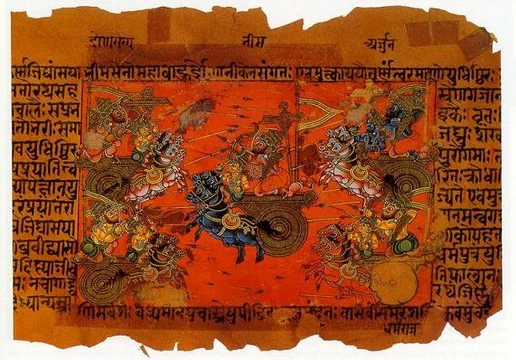
Tarakamaya War
A mythological war over the love of Tara.
The Tarakamaya War (Sanskrit: तारकामय युद्ध), meaning "war over the love of Tara," is a conflict from Hindu mythology. It was triggered when Soma, the moon god, eloped with Tara, the wife of Brihaspati. This war is recorded in the Padma Purana and is counted as the fifth battle in the Devasura Sangrama, the ongoing series of wars between the devas and asuras.
Several legends explain the war’s cause. One says Chandra and Tara simply fell in love and ran away together. Another claims the abduction was meant to punish Brihaspati for having an affair with Mamata, the pregnant wife of Utathya. A third version holds that Soma, puffed up by the success of his rajasuya ceremony, acted out of arrogance. Despite Indra’s intervention, Soma refused to return Tara. Brihaspati, backed by Indra and the devas, allied with the yakshas, while Soma was supported by Shukra and the daityas, who allied with the danavas. The devas, led by Rudra, attacked the asuras with divine missiles, and the asuras fired back with their own barrage. The Brahmanda Purana adds that Vishnu joined the fight, killing the asura Kalanemi, and Indra slew Virochana, son of Prahlada, who had sided with Soma. Eventually, Brahma stepped in and returned Tara to her husband. She later gave birth to Budha, whom both Brihaspati and Soma claimed as their son, until Tara confirmed that Soma was the father.
- Mythological source
- Padma Purana, Brahmanda Purana
- Type of conflict
- Devasura Sangrama (battle between devas and asuras)
- Instigator
- Soma (Chandra), god of the moon
- Key participants
- Brihaspati, Indra, devas, yakshas, Rudra, Vishnu (on deva side); Soma, Shukra, daityas, danavas (on asura side)
- Outcome
- Brahma intervened; Tara restored to Brihaspati; Budha born, claimed by both Brihaspati and Soma, later affirmed as Soma's son
Lore & Background
According to one legend, the Tarakamaya War happened because Chandra and Tara fell for each other and ran away. According to another, this abduction occurred to punish Brihaspati for his extramarital affair with Mamata, the pregnant wife of Utathya. Another legend states that the abduction occurred due to Soma's arrogance, due to the success of his rajasuya ceremony. Soma refused to return Tara to her husband, despite an intervention by Indra.
Brihaspati, the preceptor, was aided by Indra and the devas, allied with the yakshas, while Soma was assisted by Shukra and the daityas, allied with the danavas. Led by Rudra, the devas assaulted the asuras with divine missiles, and the asuras returned this assault with a barrage of their own. The Brahmanda Purana states that Vishnu participated in the war as well, slaying the asura Kalanemi. Indra is stated to have slain Virochana, the son of Prahlada, who had sided with Soma.
Eventually, Brahma intervened and restored Tara to her husband. In due course, she gave birth to Budha, who both Brihaspati and Soma claimed as theirs until Tara affirmed that the latter was the father.
Reader's Guide
The Tarakamaya War holds significance in Hindu mythology as the fifth war in the Devasura Sangrama series, illustrating the cosmic struggle between devas and asuras. Its cause—the elopement of Tara—reflects themes of love, pride, and divine justice. The war's multiple legendary explanations (mutual love, punishment for adultery, or arrogance from a ritual) preserve uncertainty, emphasizing the complexity of mythological narratives. The involvement of major deities like Rudra, Vishnu, and Indra, alongside the intervention of Brahma, underscores the war's importance in the broader mythological framework. The birth of Budha, claimed by both Brihaspati and Soma, introduces a genealogical element linking the lunar and divine lineages. The war's legacy lies in its role as a precursor to later conflicts and its contribution to the rich tapestry of Hindu mythological lore, particularly in the Puranas.
Did You Know?
- The Tarakamaya War is described as the fifth war in the series of Devasura Sangrama.
- One legend says the war occurred because Chandra and Tara fell for each other and ran away.
- Vishnu participated in the war, slaying the asura Kalanemi.
- Indra slew Virochana, the son of Prahlada, who had sided with Soma.
More in War in mythology 1-20
Spotted an error? Know more?
This is a living reference — every entry is fact-audited, and reader corrections feed straight into our audit queue. Suggest an edit · See this site's audit record